New Study Says California Could Turn San Joaquin Floods Into a Water Supply Lifeline

California’s San Joaquin Basin sits at the heart of the state’s water crisis, struggling with decades of groundwater overdraft, shrinking snowpack, and increasingly severe floods. Now, a new set of watershed studies from the Department of Water Resources (DWR) outlines how climate change is amplifying those risks—and how the region could adapt by rethinking how it manages stormwater.
The studies focus on five key watersheds, from the Calaveras to the Upper San Joaquin, and highlight a central opportunity: capturing floodwater and storing it underground. The practice, known as Flood-Managed Aquifer Recharge (Flood-MAR), could transform destructive winter floods into a critical resource for farms, communities, and ecosystems.
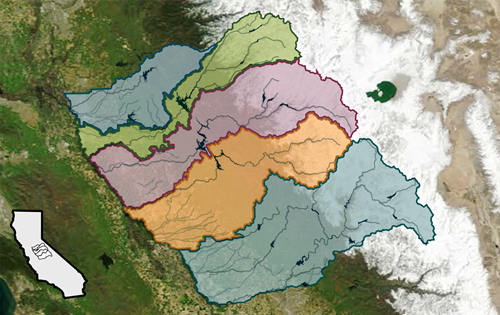
DWR evaluated a strategy that combines Flood-MAR with forecast-informed reservoir operations (FIRO), a modern approach that uses advanced forecasting to guide when reservoirs release or hold water. When big storms are predicted, operators can pre-release water to create room for incoming flows—allowing that excess floodwater to be routed into recharge basins. During dry periods, reservoirs can hold and release water strategically to support groundwater and ecosystem needs.
According to the study, using FIRO-MAR could increase groundwater recharge more than fourfold while dramatically reducing the frequency and size of flood events. It could also create temporary wetlands and improve flows for salmon and other species.
Implementing these strategies will require new agreements with water rights holders, expanded recharge infrastructure, and pilot projects to test real-world effectiveness. State officials say the findings will help guide long-term flood planning, groundwater sustainability efforts, habitat restoration, and future State Water Project operations.
