Coho Salmon Return to Upper Klamath River Basin for the First Time in Over 60 Years

In a historic milestone following the removal of the Klamath River dams, coho salmon have returned to their historic spawning grounds in the upper Klamath River Basin for the first time in over six decades.
The California Department of Fish and Wildlife (CDFW) recently documented seven coho salmon entering the new Fall Creek Fish Hatchery in Siskiyou County, located on a tributary previously inaccessible due to the now-removed Iron Gate Dam.
The coho salmon, listed as a threatened species under state and federal endangered species acts, were observed just weeks after Chinook salmon began making their way into the newly opened habitat. Of the seven returning coho, five were identified as wild, while two were hatchery-raised. The fish are currently being held at the hatchery for genetic testing to maximize diversity during the upcoming spawning process.
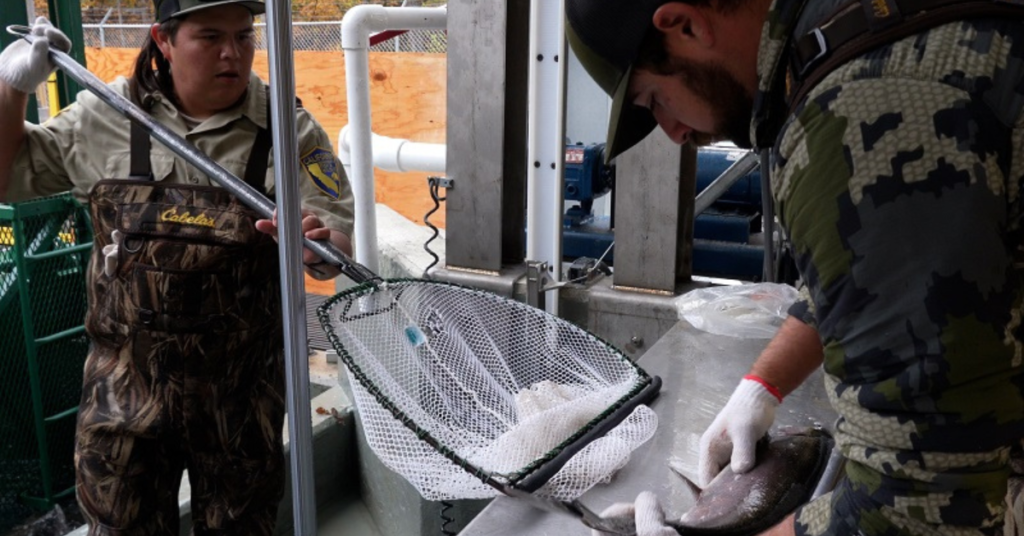
CDFW’s Fall Creek Hatchery, a $35 million facility, aims to raise 75,000 coho salmon annually to help restore populations in the upper Klamath Basin. In addition to coho, the hatchery has already spawned 100 Chinook salmon this season, collecting over 277,000 eggs, with a goal of producing 3.25 million Chinook annually.
Beyond hatchery efforts, CDFW has been actively monitoring the newly accessible 420 miles of habitat. Early surveys in tributaries like Jenny and Shovel creeks have recorded over 300 Chinook salmon, signaling a promising start to natural recolonization.
