Lake Oroville Dramatically Increases Water Releases Amid Atmospheric Rivers, Flood Risks
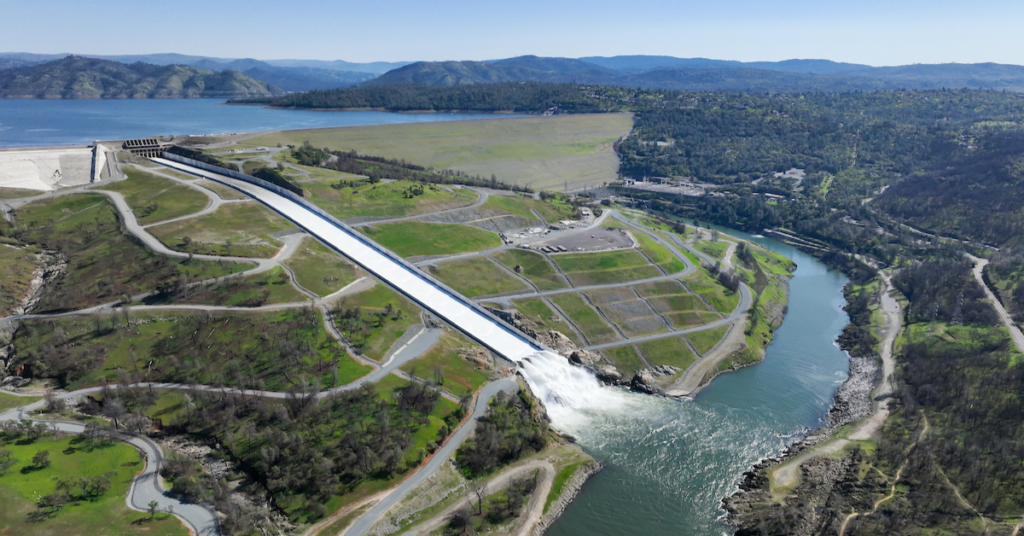
The Department of Water Resources (DWR) has significantly increased flood control releases from Lake Oroville, citing recent heavy rainfall and snowfall from atmospheric rivers hitting the Feather River watershed.
These increased inflows necessitated ramped-up releases through both the Hyatt Powerplant and Oroville Dam’s main spillway to ensure the protection of downstream communities.
Lake Oroville, currently at 864 feet elevation, stands at 85 percent of its total capacity—about 2.9 million acre-feet—which is 124 percent of the historical average. Flood control releases to the Feather River have now reached 10,000 cubic feet per second (cfs).
Federal guidelines mandate these flood control releases, managed in close coordination with the U.S. Army Corps of Engineers (USACE), between October and June. This protocol reserves storage space to handle additional runoff from rain and future snowmelt, preventing potential flood damage.
DWR balances these flood prevention measures with water conservation strategies, monitoring weather forecasts and snowpack to optimize water storage for California’s extensive water delivery system. Lake Oroville serves as a critical resource within the State Water Project, supplying water for environmental protection, local agricultural needs, salinity control in the Delta, Central Valley irrigation, and eventually water supply to Southern California.
Officials remind residents that release amounts may fluctuate based on ongoing weather conditions. DWR reassesses these releases daily, emphasizing its priority to maintain public safety, flood control, and water conservation throughout the season.
