Legal Fight May Loom After NOAA Denies Endangered Status for Chinook Salmon
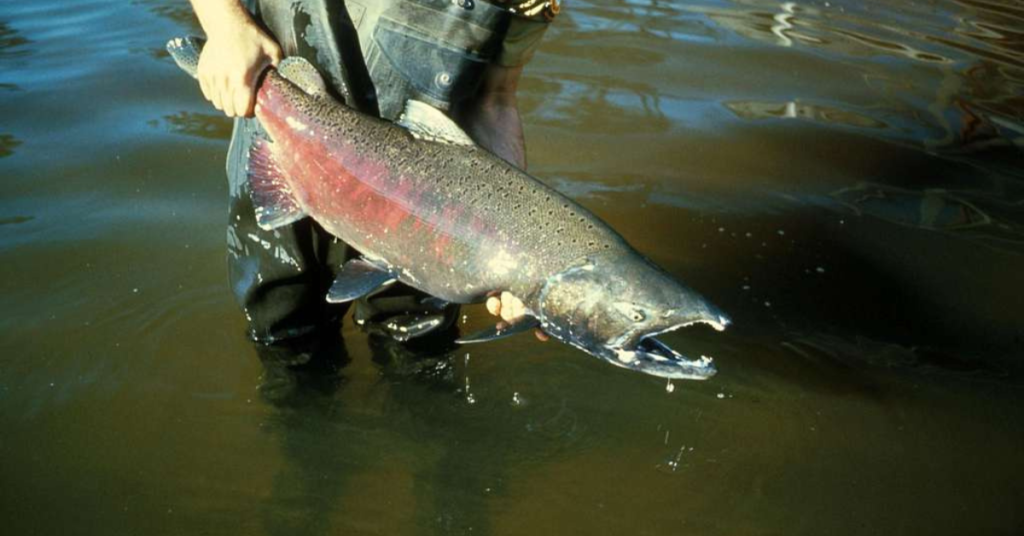
Federal fisheries officials have denied a request to list West Coast Chinook salmon as threatened or endangered under the Endangered Species Act, a decision that conservation groups say could soon face legal challenges.
On Dec. 8, the National Marine Fisheries Service and NOAA rejected a petition seeking federal protections for Chinook salmon populations in Southern Oregon, Northern California, and along the Oregon Coast. The petition, filed in 2022 by the Center for Biological Diversity and partner organizations, cited chronically low numbers of spring-run Chinook, along with habitat loss from logging and dams, warming stream temperatures, and insufficient regulatory protections.
In response to the denial, the Center for Biological Diversity said it is reviewing the decision and considering a legal challenge. Conservation advocates argue that Endangered Species Act protections would have benefited not only salmon, but also wildlife that depends on them, including orcas, river otters, bald eagles, and bears. They also contend the ruling primarily favors logging interests and dam operators.
Federal regulators concluded that Chinook salmon remain large in number and widely distributed, and that spring-run fish in Oregon and Northern California are not distinct enough to qualify as a separate protected population. Conservation groups dispute that finding, noting that NOAA already recognizes spring-run Chinook as endangered in California’s Central Valley and the upper Columbia River, and that recent science suggests similar genetic and ecological distinctions elsewhere.
If listed, the salmon would have received stronger oversight of logging near waterways, new dam requirements for fish passage and cold-water releases, and increased restoration funding. Other wildlife advocates have also criticized the decision, warning that denying federal protection could further imperil already declining salmon populations across the West.
