Scientists Are Testing a New Way to Fix Clear Lake’s Toxic Algae Problem
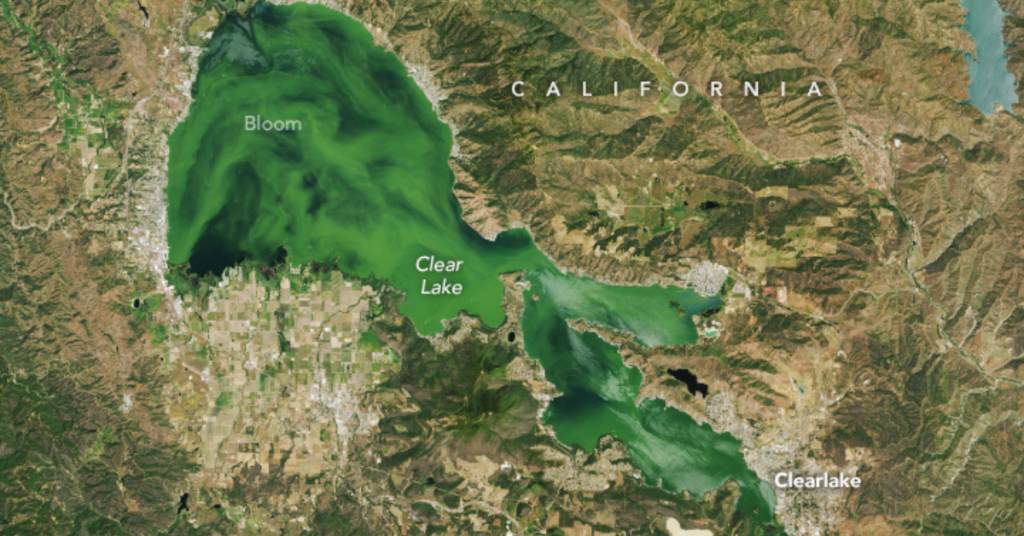
Clear Lake holds more fish per acre than any other lake in the country. It also produces some of the worst toxic algal blooms in California every single summer.
A team of scientists thinks they may have found a way to change that.
In mid-April, researchers from environmental firms SePRO and EutroPHIX applied a clay-like substance called EutroSORB G to a 400-acre test area of the lake near Lucerne. The material is made from lanthanum-modified bentonite and is designed to sink to the lakebed, bind with phosphorus trapped in the sediment and prevent it from cycling back into the water column where it feeds cyanobacteria.
Phosphorus is the primary driver behind Clear Lake’s annual blooms. When levels spike, cyanobacteria take over, floating to the surface, blocking sunlight and producing toxins that are dangerous to people, pets and wildlife. The blooms shut down swimming, boating and fishing during peak summer months and hammer the local tourism economy.

The team sampled 66 sites across the lake in March to identify the highest phosphorus concentrations and treated roughly 1% of the total water body. They will return in three months and again in one year to measure results.
If the pilot proves effective, a full-scale treatment of the entire lake could cost up to $200 million over 10 to 20 years. The initial $3 million in funding came from the California Natural Resources Agency.
Researchers say the treatment alone is not a permanent fix. Long-term restoration will also require rebuilding the wetlands surrounding the lake, more than 90% of which have been lost to levee construction over the decades.
