Yosemite’s Famed Firefall Has Arrived. Here’s Everything You Need to Know.
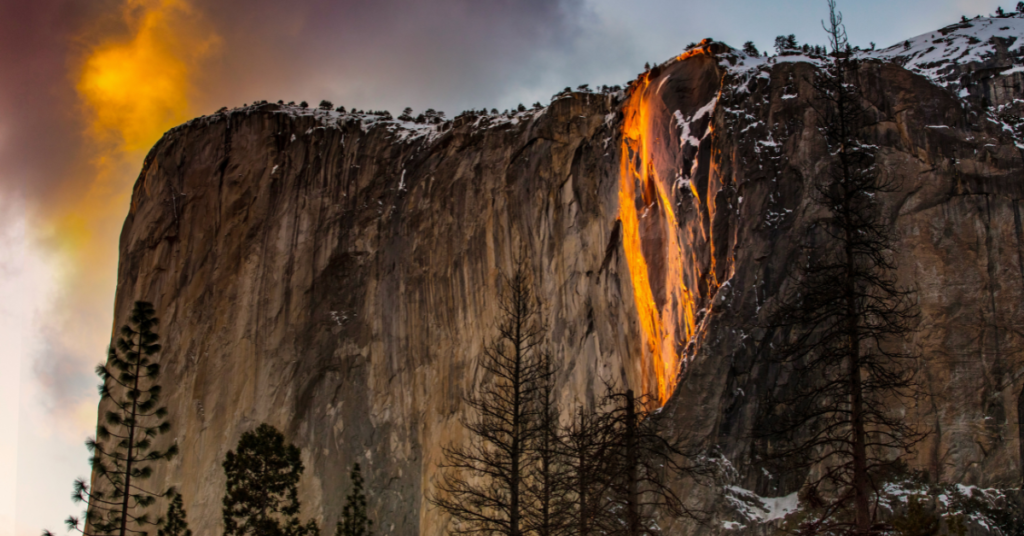
For a brief stretch in February, Yosemite National Park turns into one of the most photographed places on Earth.
The reason? A natural light show known as the “Firefall,” when Horsetail Fall appears to glow like liquid fire as it pours down El Capitan at sunset.
If you’re planning to chase it in 2026, here’s your complete guide.
What Is the Firefall?
Horsetail Fall is a seasonal waterfall that flows down the eastern face of El Capitan. It only runs during winter and early spring, depending on snowpack. In mid-to-late February, the setting sun lines up perfectly with the waterfall. When skies are clear, the low-angle sunlight illuminates the falling water in bright orange and red tones, creating the illusion of lava cascading down granite.
It’s not guaranteed. No water or too many clouds means no glow.
When to Go in 2026
The prime viewing window runs from February 10 through February 26. Sunset in Yosemite Valley typically falls between 5:30 and 5:40 p.m., and the fiery effect lasts just a few minutes.
Weekends draw the biggest crowds, and Presidents Day is traditionally one of the busiest days of the season. For a quieter experience, aim for a weekday.
Where to Watch
Designated viewing areas are set up along Northside Drive near El Capitan. Parking is restricted in several areas, and temporary traffic holds may occur after sunset to manage congestion. Plan to arrive early, park legally and walk to your viewing spot.
Staying on established paths is critical. In past years, heavy foot traffic caused damage to riverbanks and vegetation.
Do You Need a Reservation?
Unlike some previous years, no special reservation is required for Firefall season in 2026. Visitors still need a valid park entrance pass.
What to Expect
February in Yosemite Valley can mean daytime highs in the low 50s and nighttime temperatures near freezing. Bring warm layers, sturdy footwear and a headlamp for the walk back after dark. From November through March, vehicles must carry tire chains due to winter conditions.
If everything aligns, you’ll witness one of California’s most iconic natural spectacles. And when it happens, it only lasts minutes.
