One Wolf Can Cost a California Rancher $162,000 Annually, According to New Study
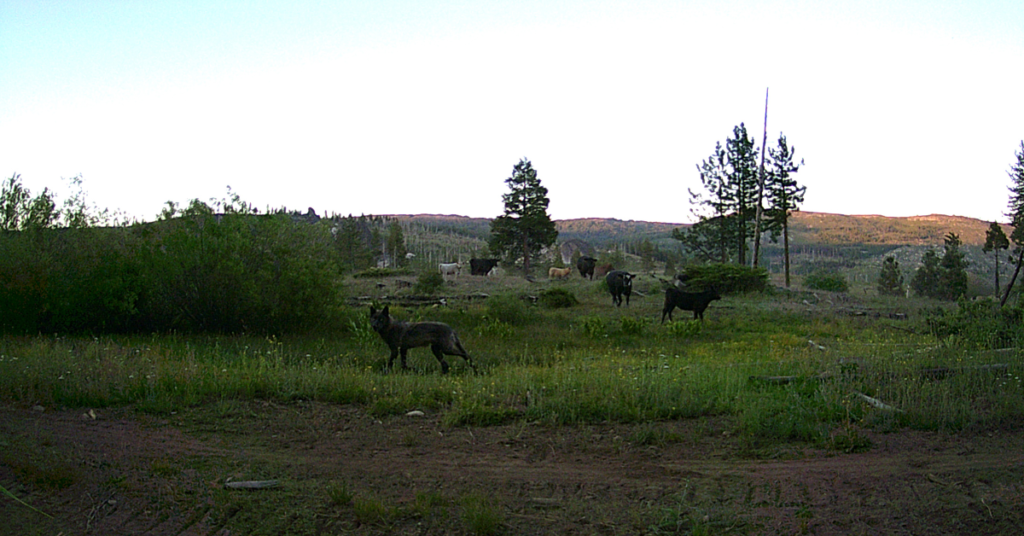
(Ken Tate and Tina Saitone / UC Davis)
New research from UC Davis reveals the substantial economic impact that California’s expanding gray wolf population has on cattle ranchers, with losses potentially reaching millions of dollars. Utilizing GPS collars, motion-activated field cameras, scat analysis, and cattle tail hair samples, researchers documented significant stress and productivity declines among cattle in wolf territories.
Since their reappearance in California in 2011, gray wolves have established seven packs, prompting rancher concerns over cattle predation. Tina Saitone, UC Davis professor and specialist in livestock economics, led an interdisciplinary study to assess the wolves’ direct and indirect economic impacts. Her team, including experts in rangeland sciences, genetics, and veterinary medicine, focused on three wolf packs in northeastern California from 2022 to 2024.

Ken Tate / UC Davis)
Key findings include substantial economic losses—each wolf costing ranchers between $69,000 and $162,000 annually due to reduced cattle pregnancy rates and calf weight gains. Total losses across studied areas could range between $1.4 million and $3.4 million. Analysis also found cattle DNA in 72% of wolf scat samples, indicating cattle as a significant food source. Elevated cortisol levels in cattle demonstrated heightened stress linked directly to wolf presence.
“The scale of conflict between wolves and cattle is substantial, expanding, and costly,” said Saitone.
This research underscores the urgent need for sustainable coexistence strategies, as current measures appear insufficient. The California Department of Fish and Wildlife is now considering new management practices to mitigate rancher losses while protecting the endangered wolves.
