The Giants of Drakes Beach: A Closer Look at Point Reyes’ Elephant Seals
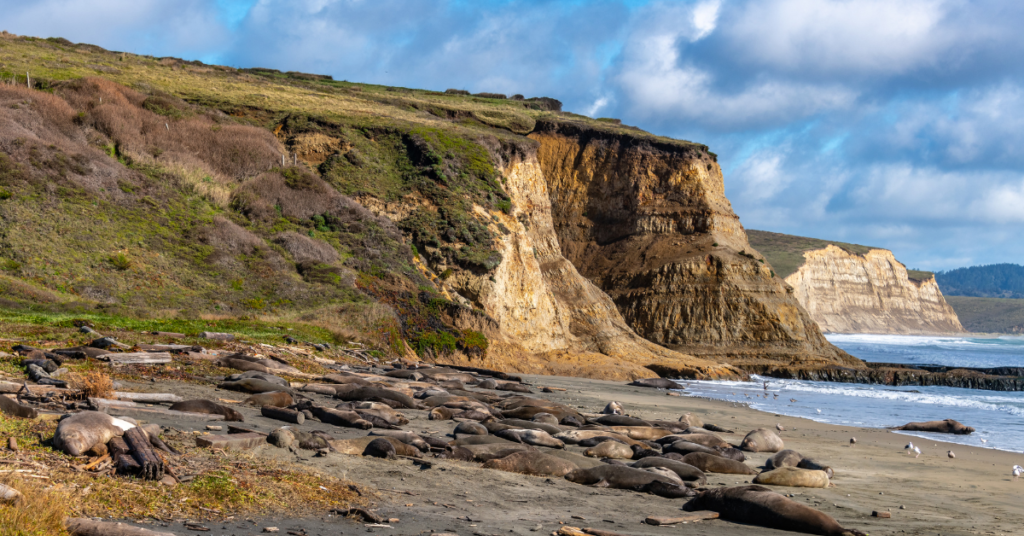
Every winter, a stretch of sand at Drakes Beach turns into one of Northern California’s most unforgettable wildlife spectacles. That’s when northern elephant seals haul out by the hundreds at Point Reyes National Seashore, filling the beach with sound, motion, and an astonishing amount of blubber.
These seals are giants. Adult males routinely tip the scales at 4,500 to 5,000 pounds, while females top out closer to 1,800 pounds. Nearly half of a large male’s body weight can be fat, an essential fuel source for long migrations and deep dives.
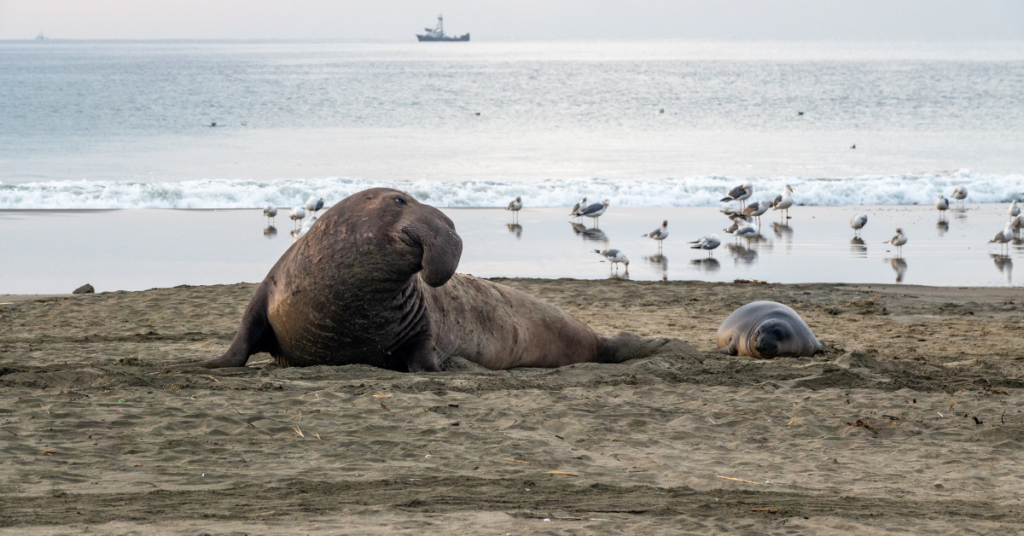
And migrate they do — more than once a year. Northern elephant seals spend winter breeding on beaches in California and Mexico, then head north to feed in the cold waters off Alaska and the Aleutian Islands. After that, they travel south again to molt, shedding fur and skin, before repeating the cycle. They’re the only mammal known to complete this double migration annually.
Life starts fast for pups. Mothers nurse their young for about four weeks, during which pups balloon from roughly 60 pounds to nearly 300. Mom pays the price, losing significant weight before returning to sea.
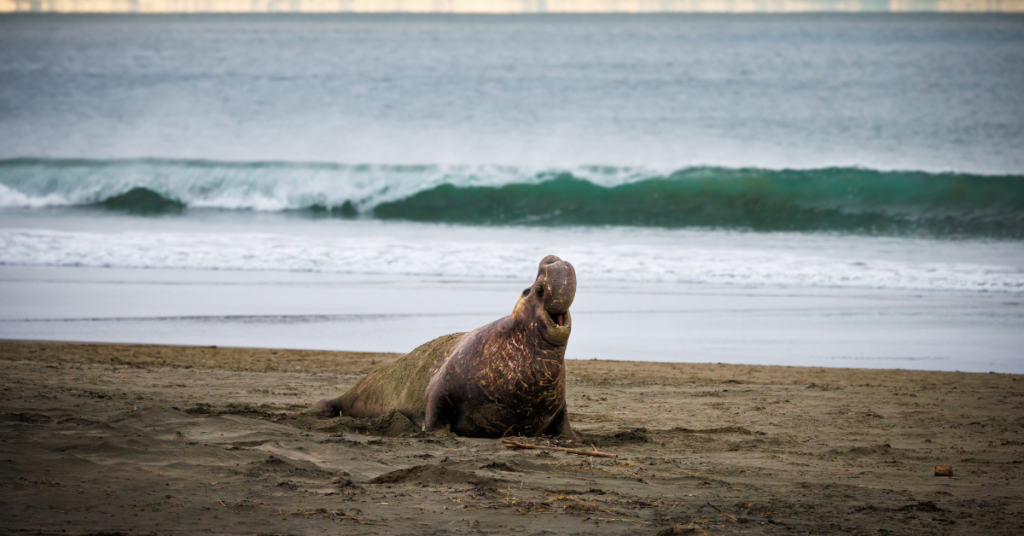
Most of an elephant seal’s life happens underwater. They spend about nine months a year at sea, diving as deep as 2,500 feet, often holding their breath for 30 minutes or more, according to the National Oceanic and Atmospheric Administration.
Hunted nearly to extinction in the 1800s, northern elephant seals have made a remarkable recovery. Today, seeing them piled along Drakes Beach is a powerful reminder of how resilient wildlife — and the Pacific coast — can be.
