Wolf Comeback in Trouble? Only 3 Packs Had Pups in California This Year
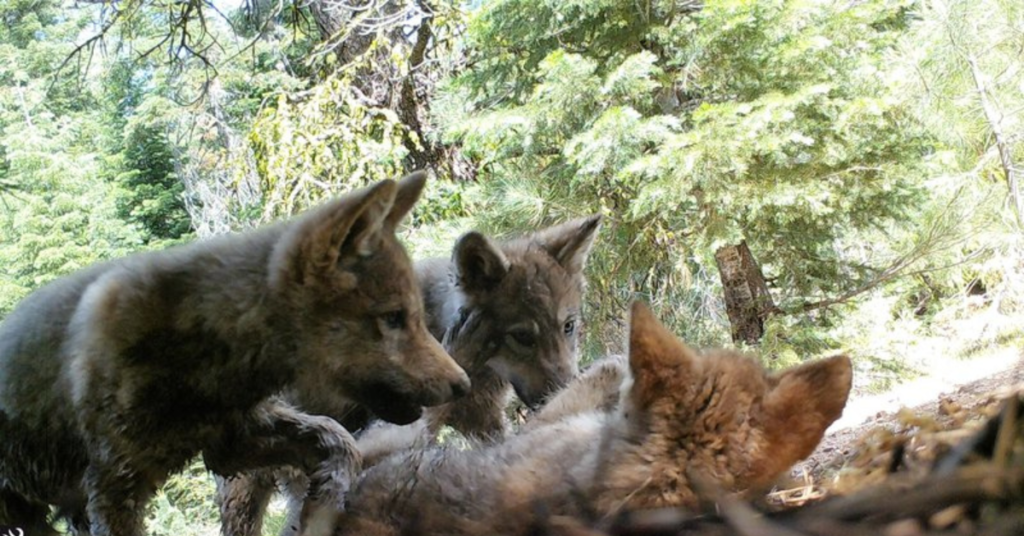
California’s wolf population saw limited reproduction this year, with just three of the state’s 10 known packs producing pups, according to the California Department of Fish and Wildlife’s latest update. The report covers wolf activity from April through June, with new details through July.
“I’m glad to know at least three of California’s wolf families had pups this year but it’s concerning that there’s no indication the other seven packs have had pups,” said Amaroq Weiss, a senior wolf advocate at the Center for Biological Diversity. “Wolf recovery here is still in its infancy and for recovery to stay on track there need to be more wolves in more places.”
The Harvey pack had at least seven pups, the Beyem Seyo pack produced a minimum of six, and the Whaleback pack welcomed at least nine. No reproduction was documented for the Ashpan, Diamond, Ice Cave, Ishi, Lassen, Tunnison, or Yowlumni packs — a concerning trend given some have produced litters in previous years.
Wolf territories now span parts of Siskiyou, Lassen, Plumas, Sierra, Shasta, Tehama, and Tulare counties. Notable movements included a Beyem Seyo male traveling into Oregon, a female from the same pack joining the Yowlumni pack in Tulare County, and two wolves of unknown origin detected in the Tehachapi Mountains of Kern County.
The return of wolves to California began in 2011 when OR-7, a radio-collared wolf from Oregon, crossed the state line. His lineage lives on — one of his daughters helped found the Yowlumni pack.
Wolves are fully protected under both federal and California endangered species laws. Advocates hope more litters will be confirmed later this year, emphasizing that legal protections have been key to the species’ comeback after nearly a century of absence.
