Could Yosemite Valley Have Been Carved by an Ancient Volcano? New Study Suggests So.
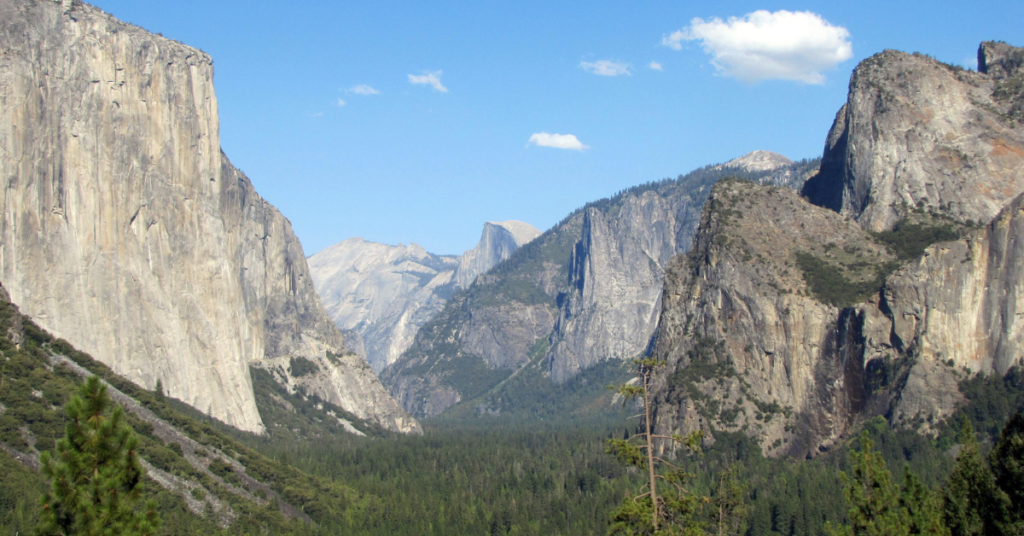
A new theory is shaking up the way geologists view Yosemite Valley — suggesting it may have been carved not just by glaciers and uplift, but by a long-lost river and ancient volcano.
The iconic granite walls of Yosemite tower up to 4,000 feet above the valley floor, and scientists have long debated how they got so deep. While many believe a combination of tectonic uplift and glacial erosion shaped the valley, a new study published in Geosphere proposes an alternate origin.
Geomorphologist Manny Gabet of San Jose State University believes a now-vanished river — once fed by volcanic highlands — supercharged the flow of the Merced River and Tenaya Creek millions of years ago. This powerful waterway, Gabet suggests, may have carved the valley and nearby Tenaya Canyon long before glaciers moved in.
There are some geological mysteries that this theory helps explain: the massive depth of Tenaya Canyon despite its tiny stream, puzzling deposits of volcanic rock in the Central Valley, and uneven erosion patterns along the Tuolumne River.
The volcano and river that may have shaped Yosemite have long since eroded away, leaving no direct evidence. But researchers are now using modeling to recreate the ancient Sierra Nevada landscape and test the idea.
